Works on Water Triennial
The Works on Water 2025 Triennial was a multi-sited exhibition and series of public art interventions made on, in, and with bodies of water, created in response to the global climate crisis. The exhibition, curated by Emily Blumenfeld and Kendal Henry with the Works on Water team, frames the growing genre of Water Art as a defining environmental art form of the 21st century, exploring themes of access, exploitation, conservation, remediation, and care. Now in its third edition, this dynamic triennial invites New Yorkers to experience and reimagine the edges of the city through site-specific, participatory, and time-based works, in partnership with Wildlife Conservation Society/NY Aquarium, South Street Seaport, and North Brooklyn Boat Club. It took place at LMCC’s The Arts Center at Governors Island.
Works on Water 2025 Triennial artists: Nora Almeida / iki nakagawa, Frank Bloem, Monica Jahan Bose, Donald Hài Phú Daedalus, Jeremy Dennis, Sherese Francis, Jana Harper, Perrin Ireland, Art Jones, Marie Lorenz, sTo Len, Stacy Levy, Mare Liberum, Mary Mattingly, Wes Modes, Lize Mogel, Eve Mosher, Nancy Nowacek, Jean Shin, Sarah Cameron Sunde, Sunk Shore (Carolyn Hall and Clarinda Mac Low), Elizabeth Velazquez, and Marina Zurkow.
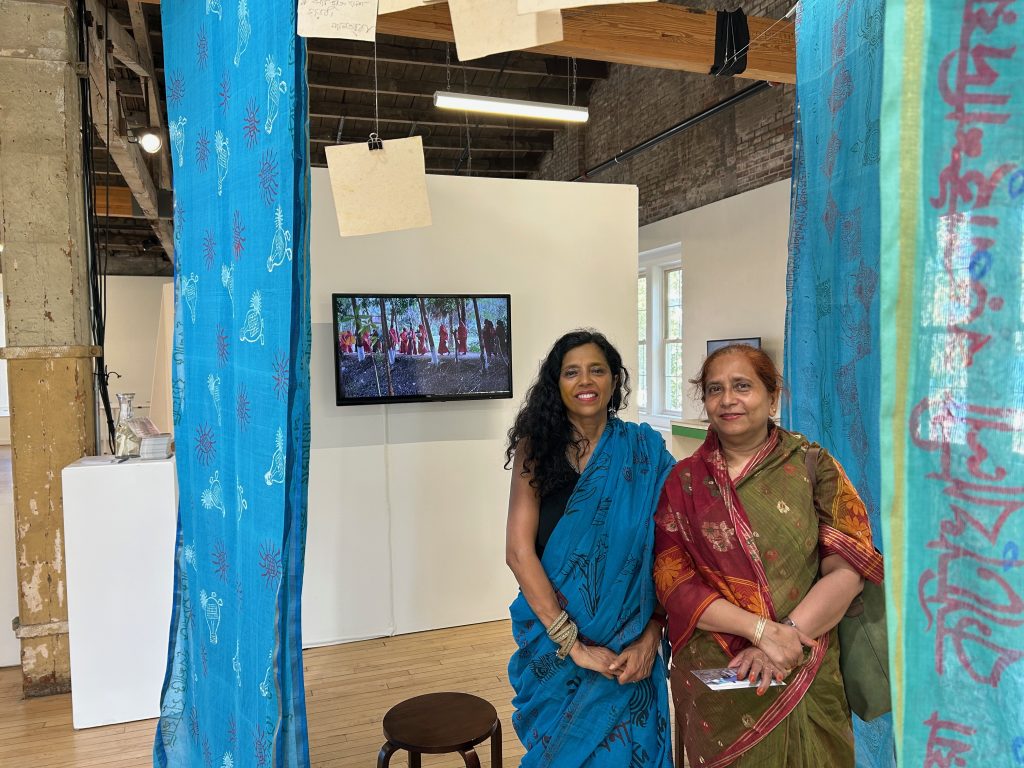
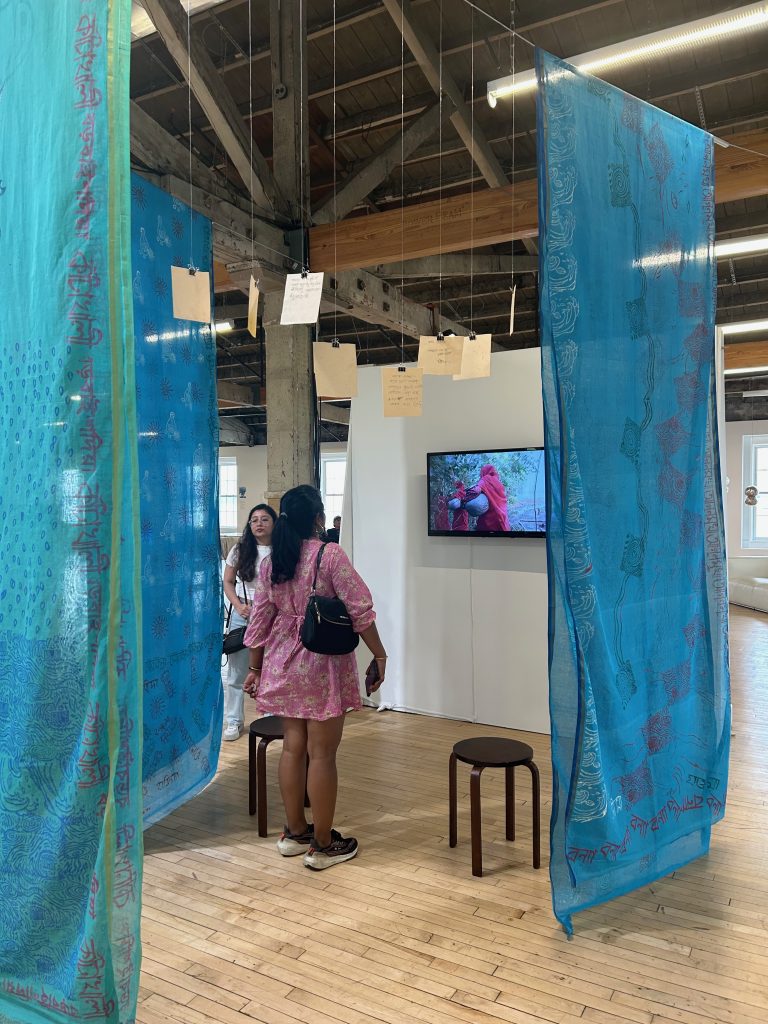
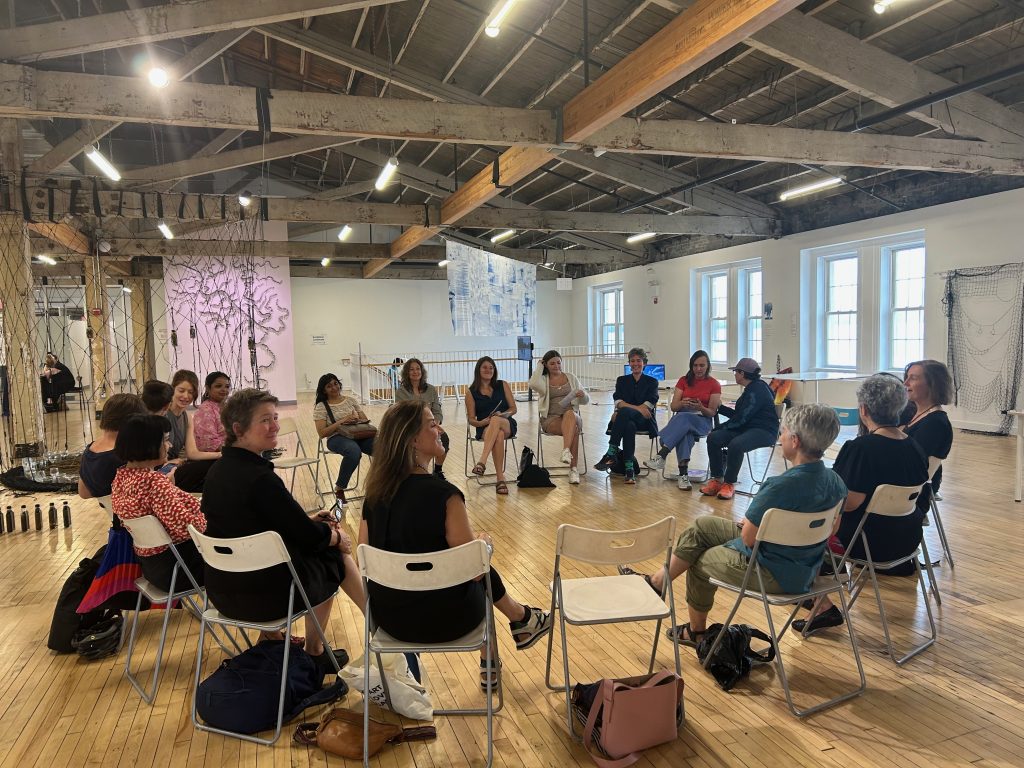
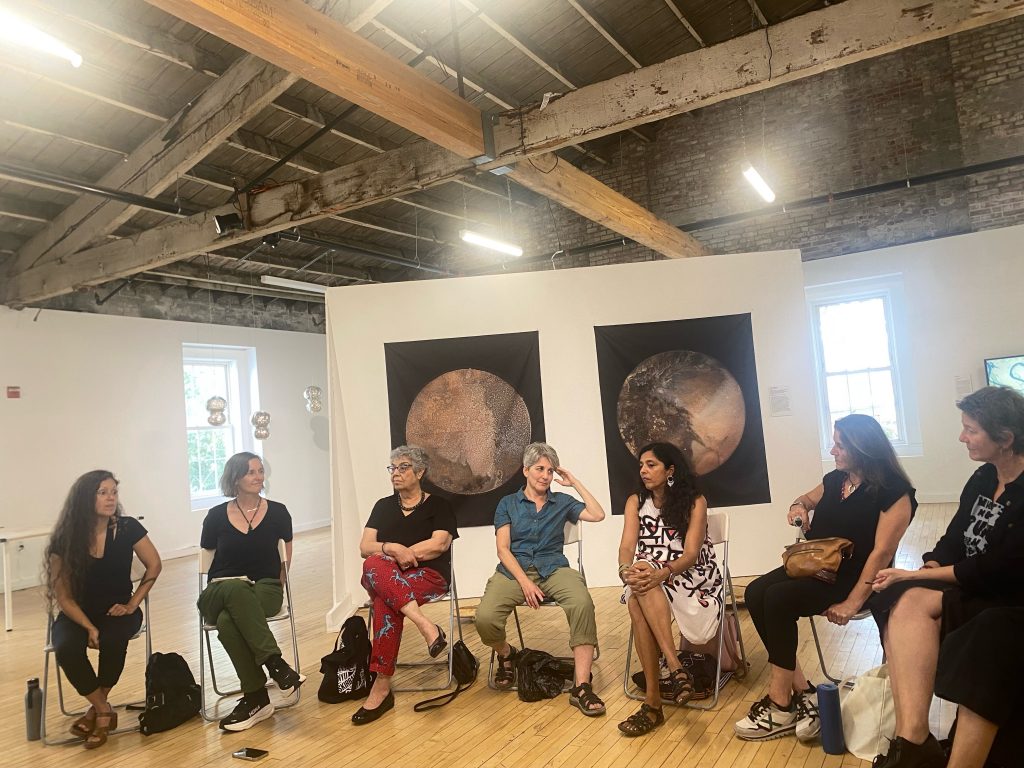
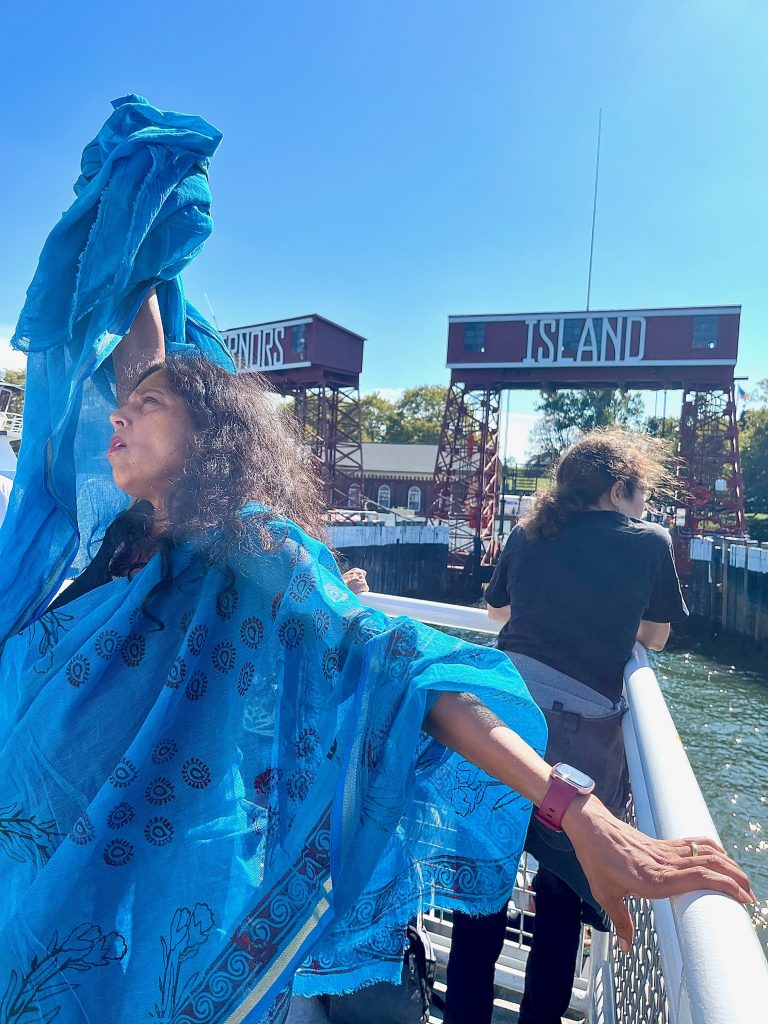
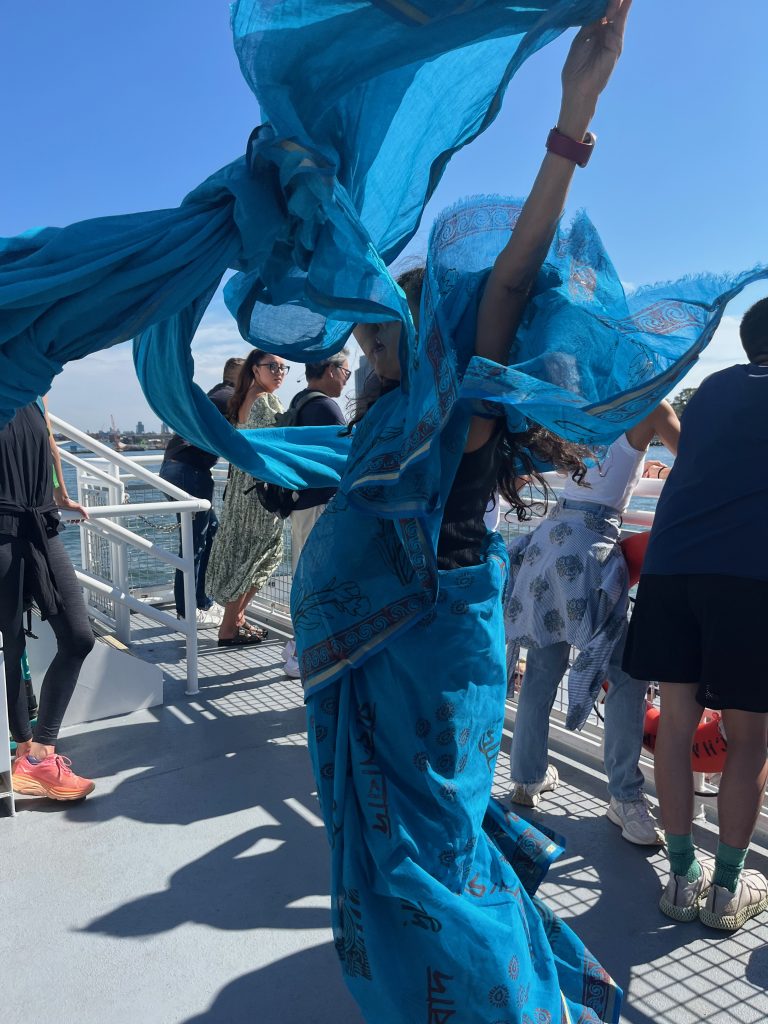
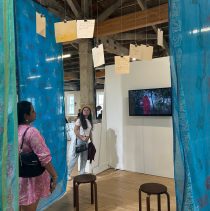
Monica Jahan Bose created a video installation called “Darchira River,” based on the river on the banks of which she organized a performance of the same name in 2016 with women farmers from her ancestral village in Katakhali. She also participated in an artist’s roundtable and did a performance on the ferry to Governor’s Island.
Monica Jahan Bose
Darchira River, 2025
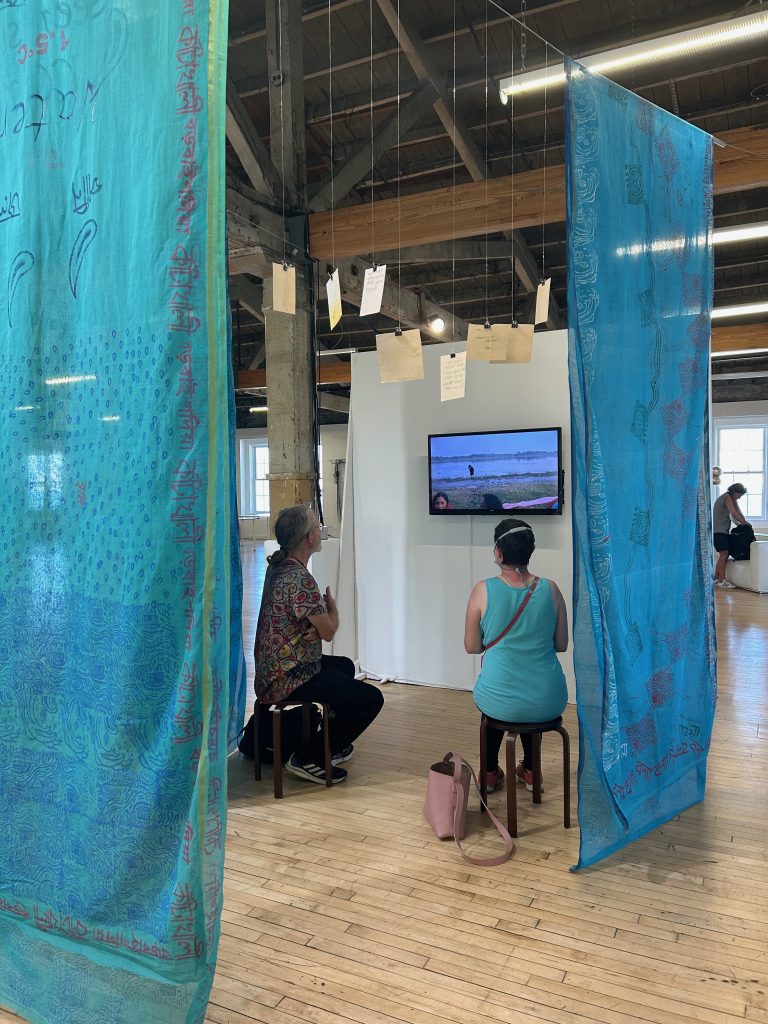
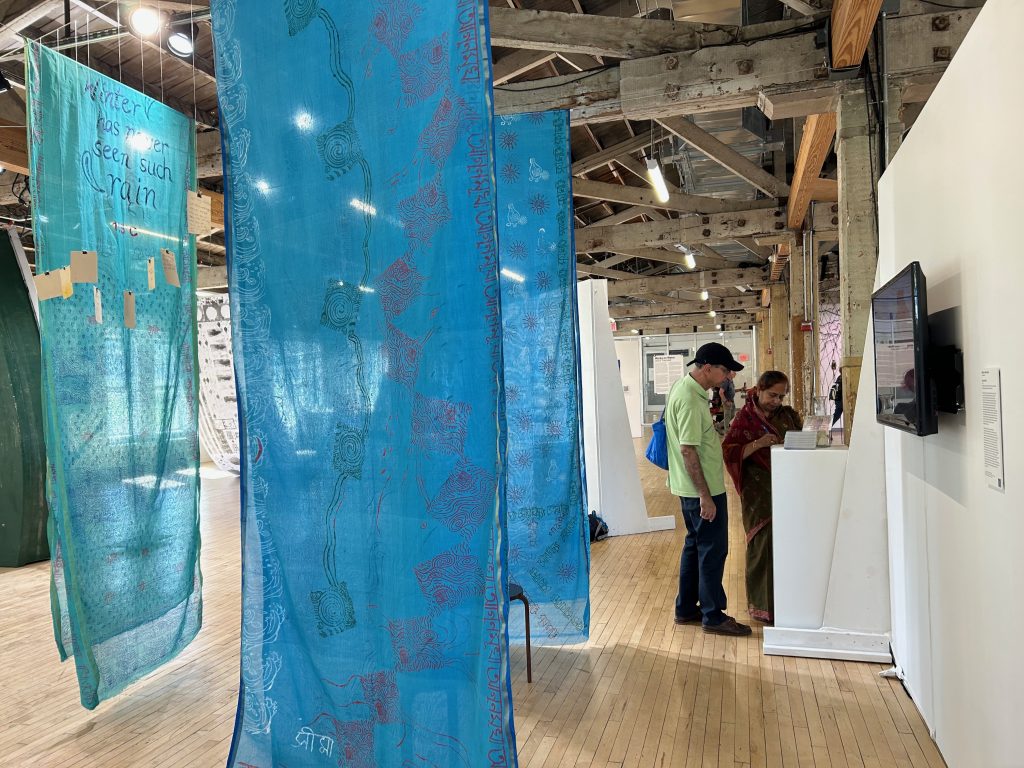
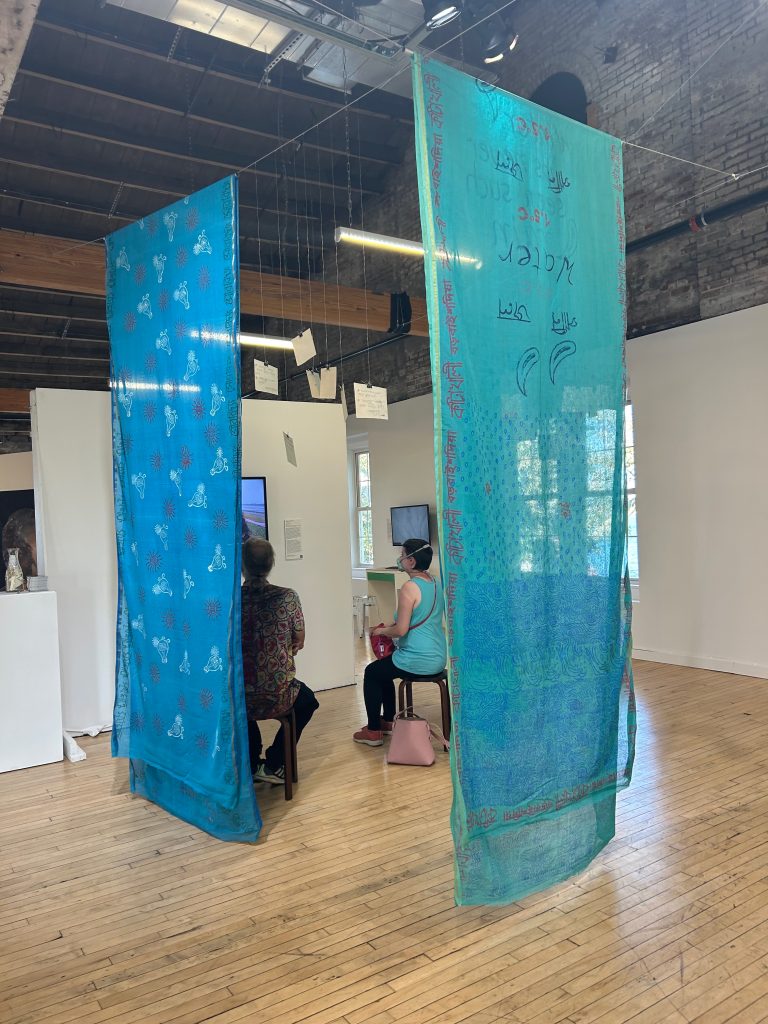
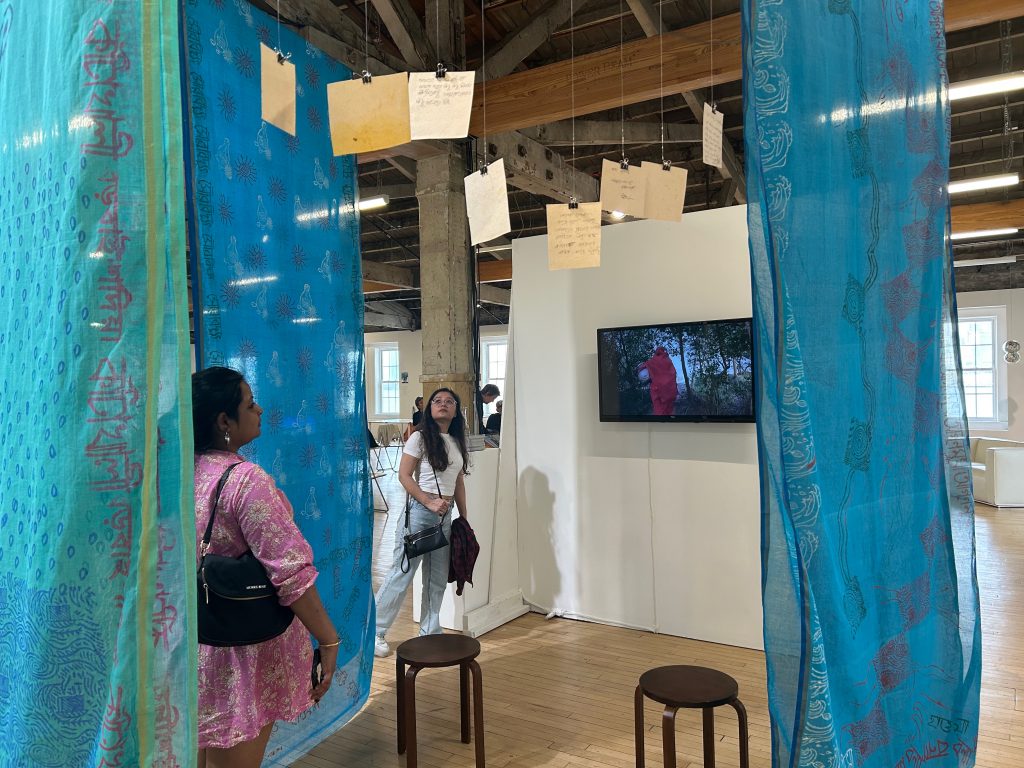
Single-channel video (19:22), cotton saris with woodblock and painting, handmade paper with writing.
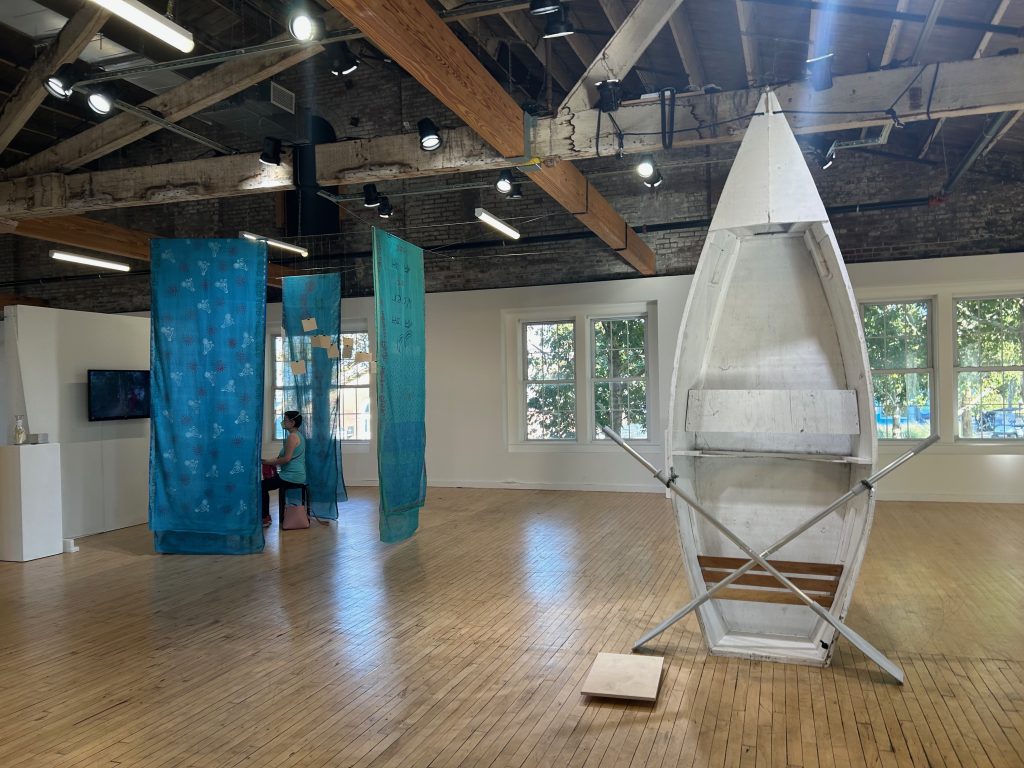
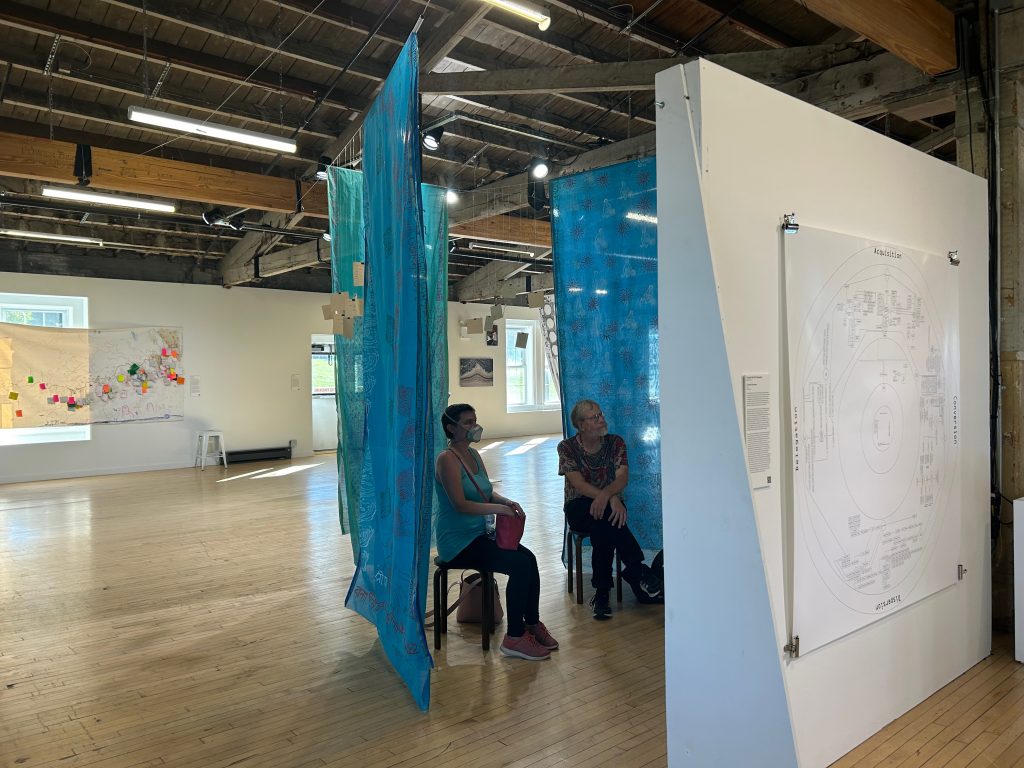
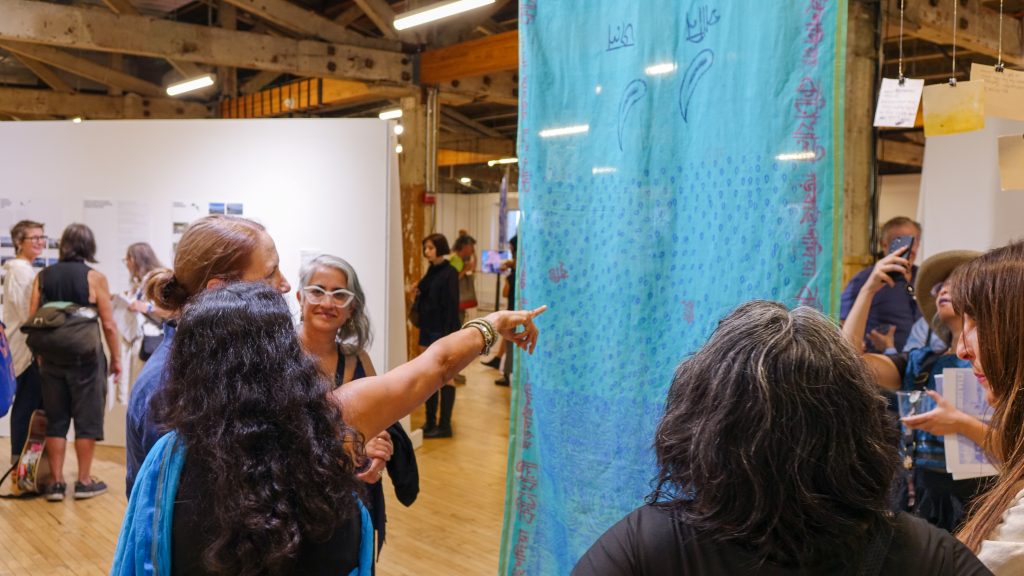
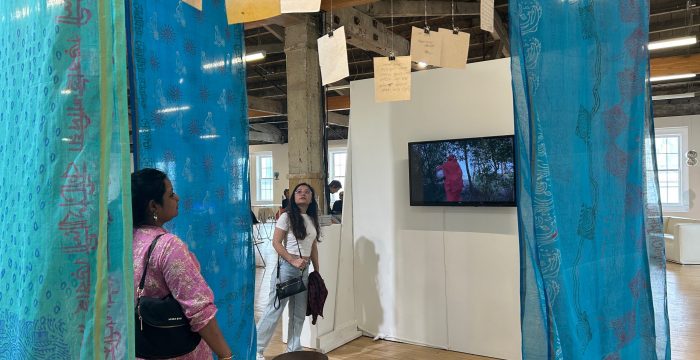
Darchira River was a collaborative performance that took place in 2016, led by Bangladeshi-American artist and climate activist Monica Jahan Bose, who created the ongoing art and advocacy project Storytelling with Saris. The film was completed and first presented in Dhaka in 2024. The Darchira River, which flows into the Bay of Bengal, is just a few miles down from the Jahan Bose’s ancestral village of Katakhali, an island community that has been devastated by catastrophic storms and flooding. The film and performance speak to the centrality of the river in the life of the village, the increasing salinity of the river due to climate change, and the decline of the river and its fish since it was closed off with a levee to reduce flooding/storm surge. The Dachira River performance followed a collaboratively-scripted outline, but was also open to spontaneity, as Jahan Bose and the women farmers of the village unfurl a massive stitched-together sari, sing traditional songs about rivers and storms, grind freshly harvested turmeric root, write about their hopes and fears of water and climate change, immerse those words in water, and drink the water, reframing a Muslim ritual of hope. The red and black saris symbolize different stages of women’s lives. At one point, Jahan Bose descends into the river. When she emerges, her feet covered in thick mud, the other women rush to her to offer ablution. The exhibit’s screening space is framed by woodblock-printed and painted saris, made by Jahan Bose and the Katakhali women. The installation also features the handwritten messages in Bangla written during the performance.